A law firm SEO proposal should tell you what will change, who will do the work, and how delivery will be verified. A recurring line item for optimization is too vague to explain what the firm is buying.
Compare the proposed work against your desired matters, actual locations, existing website, and intake capacity. A firm opening a second office has different dependencies from one replacing its website or expanding an employment practice.
This checklist is published by Small World Marketing, which provides law firm marketing and SEO. It is designed to make the scope inspectable, including our own proposals.
Ask for a baseline that supports decisions
The initial audit should identify the pages, local profiles, search data, and inquiry path. It should explain missing access and whether tracking is reliable enough to establish a starting point.
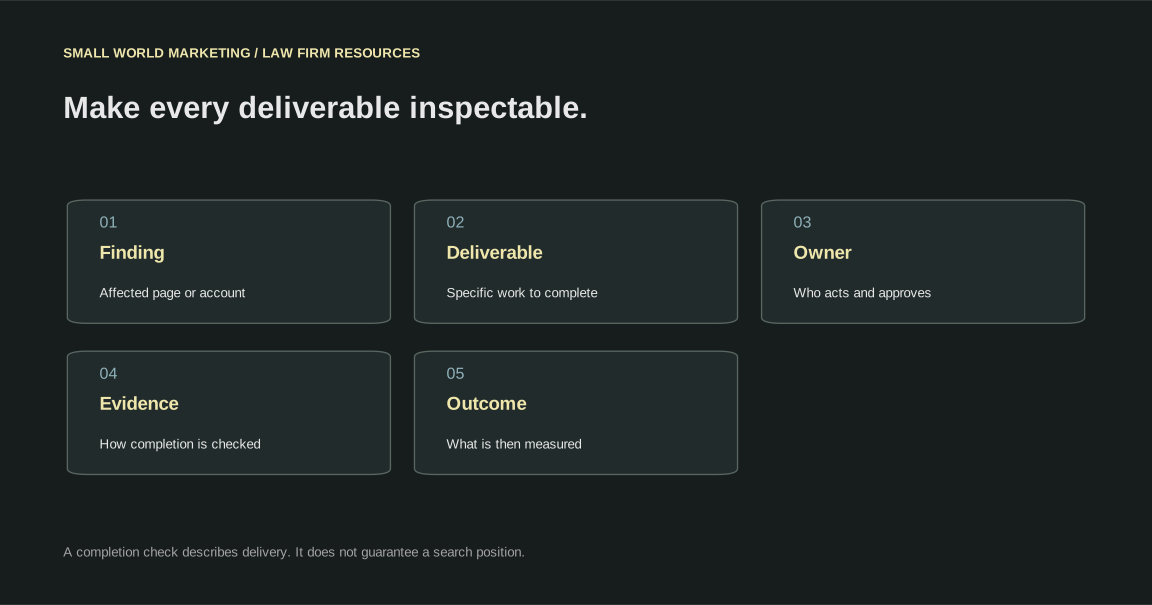
Request an affected URL or account for each important finding. A general grade can summarize conditions, but it does not show what needs to happen next. A useful finding describes the observed problem, why it matters, and the proposed action.
| Audit area | Evidence to request | Decision supported |
|---|---|---|
| Service coverage | Current URLs matched to actual practice areas | Improve, combine, or create pages |
| Technical access | Specific response, indexing, canonical, or link issues | Technical priorities and implementation scope |
| Local presence | Eligible profiles, ownership, and business information | Corrections, access, and page relationships |
| Content | Unsupported claims, unanswered questions, overlapping intent | Research and review requirements |
| Intake | Controlled delivery and measurement checks | Reliable inquiry reporting |
Ask what data was available. A proposal based on a public crawl has different evidence from one using the firm's Search Console and aggregate inquiry outcomes. Missing data should be identified rather than replaced with confident guesses.
Require named deliverables
The recurring scope should distinguish a practice-page rewrite, a new supporting guide, a profile correction, and a technical implementation. Those tasks have different review and completion requirements.
If content is included, specify the asset types, source expectations, firm review, revisions, publication responsibility, and ongoing refreshes. If technical changes are included, establish who can make them and whether another developer is required.
| Deliverable | Scope question | Completion evidence |
|---|---|---|
| Practice pages | Which services and jurisdictions are covered? | Approved published pages and relevant links |
| Local SEO | Which offices and eligible profiles are included? | Documented corrections and public checks |
| Technical work | Does the provider implement or only recommend? | Affected URLs and validation results |
| Supporting content | Which reader tasks will it solve? | Sources, approval, and publication |
| Relevant authority | What activity is proposed and why? | Relevant placements or documented work |
| Reporting | Which stages and definitions are tracked? | A consistent baseline and business-focused report |
Our local SEO guide and legal content service give more detail on those two workstreams.
Put ownership beside the work
Marketing delivery needs account access, lawyer review, and intake feedback. Name the person responsible for each dependency and the person who can approve publication.
For example, a writer can draft a wrongful dismissal guide, but the relevant lawyer must approve its jurisdiction-specific substance. An agency can recommend a form change, but the firm's intake owner should confirm the destination and required fields.
Record blocked work in reporting. If a practice-page draft is waiting for review, it should not appear as a completed publication. If implementation requires access the provider does not have, the scope should show how that access will be arranged.
Separate recurring fees from other costs
Identify agency fees, setup, content beyond the agreed scope, website work, software, advertising media, and applicable taxes. Confirm currency, billing schedule, cancellation terms, and the procedure for expanding the engagement.
Two proposals with the same monthly price can include very different work. One may include implementation and publishing; another may deliver recommendations for the firm to execute.
Our current pricing lists starting programs. The law firm marketing cost guide explains how to compare a full budget without treating a headline fee as the total cost.
Keep accounts and exit arrangements clear
| Asset | Question to resolve before signing |
|---|---|
| Domain and DNS | Can the firm renew and manage them independently? |
| Website and content | Which files, rights, exports, and licences can the firm retain? |
| Google Business Profile | Does the firm retain appropriate ownership? |
| Analytics and Search Console | Will access and historical data continue? |
| Tracking numbers | Who controls the numbers and what happens on cancellation? |
| Software | Which subscriptions transfer or need replacing? |
| Intake records | Where are they stored and who can access them? |
Use individual access where the platform permits it. Keep a record of permissions, recovery contacts, and how access is removed. The firm's ability to leave should not depend on reconstructing its accounts from memory.
If the proposed arrangement includes hosting, use the law firm hosting provider checklist and hosting guide to review recovery, support, and account control.
Read performance commitments as terms, not headlines
Ask which search, market, baseline, timeframe, exclusions, measurement method, and remedy define a commitment. Review those details in the agreement. A broad headline does not tell you which of the firm's desired searches it covers.
Separate delivery commitments from search outcomes. A provider can identify work it will complete and the evidence it will report. Search results are controlled by the platforms and influenced by competition and the firm's starting position.
Treat AI visibility reporting the same way. Technical checks, brand mentions, linked citations, referral visits, and qualified inquiries are separate observations. Our AI search guide explains a repeatable measurement log.
Ask how content and professional claims are reviewed
The proposal should establish who approves legal information, credentials, awards, testimonials, and outcome statements. Regional requirements need the applicable law society's rules rather than a generic national compliance label.
For BC firms, the BC Code's marketing chapter is a primary source for the review process. Other jurisdictions have their own requirements.
The agency should explain how sources, revisions, and review dates are recorded. A content volume target without that workflow creates a publication backlog or an accuracy problem.
Evaluate relevant case work
Look for a named client, the starting situation, the work performed, and the reporting context. Ask how the example relates to your practice, market, and resources.
SWM's public studies include Fleetwood Family Law, Indie Law, and The Lacy Employment Law Firm. Their historical outcomes should be assessed as examples of past engagements, not assigned to your firm as a forecast.
Use one comparison worksheet for every provider
Keep the questions consistent. Record the answer, evidence, owner, and unresolved point. Follow up on gaps instead of assuming the provider includes work because another agency does.
Download the SEO provider comparison worksheet. It is a blank evaluation tool, not a score or an agency ranking.
How many proposals should a firm compare?
Enough to understand scope and identify a suitable working arrangement. Consistent questions are more valuable than collecting a large number of incomparable prices.
Should the agency provide a ranking guarantee?
Assess any promise through its written terms and measurement. Also review the actual deliverables, implementation responsibilities, and reporting. A promise cannot replace a useful scope.
What if the firm already has an internal marketer?
Identify what the internal team owns and where specialist support is required. The proposal can allocate research, writing, publishing, technical work, and reporting rather than duplicating existing responsibilities.
Ask Small World Marketing to review your firm's search opportunities.