Local SEO should help a prospective client find a firm that actually handles the matter in the relevant place. That requires accurate local profiles, clear service pages, genuine office information, and a working contact route.
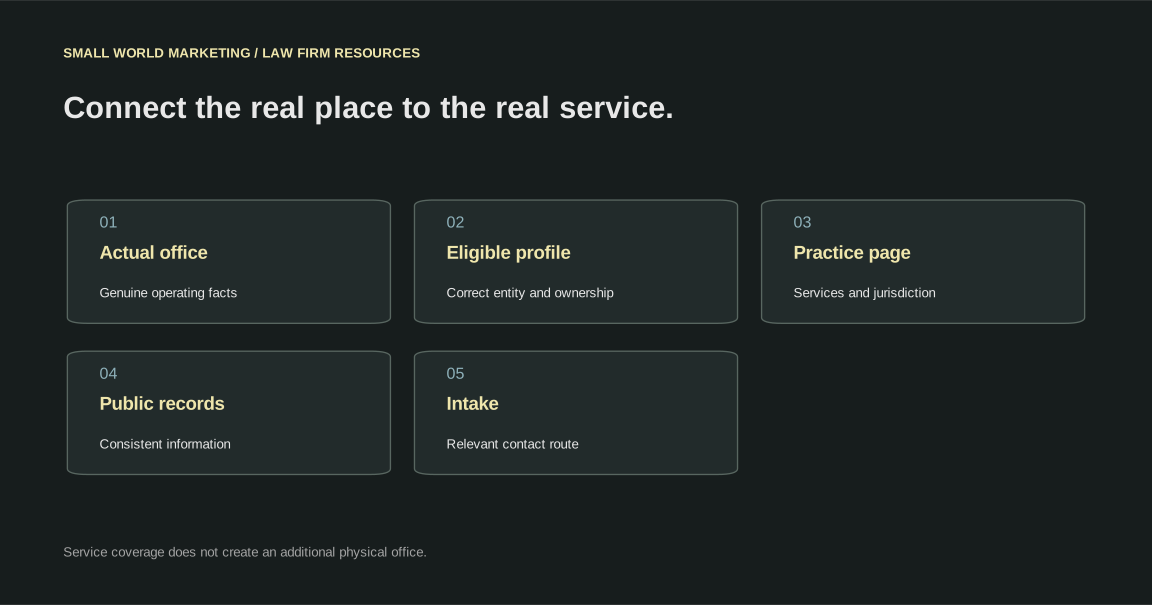
Start with the firm's real operating structure. List actual offices, public-facing lawyers, supported services, and appointment arrangements. A firm serving several communities does not automatically have an eligible office in each one.
Small World Marketing helps law firms with SEO and marketing across North America. This guide focuses on Canadian local search decisions and the evidence a firm can use to assess the work.
Understand what local visibility can and cannot change
Google describes local results using relevance, distance, and prominence. Relevance concerns the match to the search, distance concerns location, and prominence includes how well known a business is. Google says there is no way to pay for a better organic local ranking. Google's local ranking guidance.
The practical task is to improve the information and assets the firm controls. A provider should explain those actions separately from the searcher's location and platform decisions.
Do not assess the entire market from one search at the managing partner's desk. Results can vary by location and search wording. Use a documented set of representative searches and locations, then compare the same conditions over time.
Inventory offices, profiles and practice pages together
| Asset | Record | Why it matters |
|---|---|---|
| Office | Actual address, staffing, appointment arrangements | Establishes the real operating location |
| Firm profile | Eligibility, ownership, details, public URL | Identifies the local listing to manage |
| Practitioner | Public-facing role, contactability, applicable profile rules | Avoids assuming every lawyer needs another listing |
| Practice page | Service, jurisdiction, relevant lawyers, next step | Gives the searcher a useful destination |
| Location page | Genuine office or service information | Connects public information to actual coverage |
| Intake | Phone, form, scheduler, notification route | Turns relevant discovery into an inquiry |
Use the Google Business Profile guide for law firms before creating or consolidating profiles. Eligibility and naming require the actual facts, not a marketing preference.
For website planning, map a service to its strongest existing page before deciding to build another. Our practice resources include family law, personal injury, and employment law.
Make practice pages answer the local decision
Explain what the firm handles, where it can provide the service, who does the work, and what first contact involves. Use the jurisdiction-specific terminology approved by the firm.
A Vancouver employment searcher needs to understand the firm's actual service and location arrangements. Repeating Vancouver throughout a generic article does not supply that information.
Link from a relevant location page to the appropriate services and lawyers. Supporting guides should link to the service they help explain. The legal content service covers this page inventory and review workflow.
Build regional pages with a distinct reason to exist
An office page can provide directions, accessibility information, appointment arrangements, and services available at that location. A broader service-market page needs to explain genuine coverage and offer information specific to the reader's task.
Avoid claiming an office where the firm has only a mailing address or remote service coverage. Avoid creating a set of city substitutions with the same paragraphs and invented local proof.
SWM's Surrey law firm marketing page connects to published local legal work. The evidence belongs to that page's context; it should not be reassigned to another city.
Keep public business information consistent
Record the real-world business name, relevant address and phone, website, and hours or appointment arrangements. Correct material inaccuracies in important directories and professional listings.
Choose listings for relevance and usefulness. A large count of low-quality submissions is not a meaningful delivery measure by itself. Ask the provider which records changed and why those changes matter.
If the firm moves or changes a number, identify the affected website pages, profiles, directories, tracking arrangements, and notifications. Update the source records first and verify the public result.
Treat reviews as client experience and professional communication
Use a consistent process that respects platform policies and the firm's professional obligations. Google prohibits fake engagement, incentives for reviews, and selectively soliciting positive reviews. Google's review content policy.
Public replies should not confirm or disclose confidential matter details. Have a firm-approved response process for negative or sensitive feedback, including who can authorize a reply.
Report review activity accurately. The work can include process setup, staff instructions, and public response review; it should not promise a predetermined number of positive ratings.
Verify intake from the local destination
Click through the profile and service page on a phone. Test the number, form, scheduler, and notification chain with fictional details. Confirm which office or team receives the inquiry.
Tracking needs clear ownership. If a tracking number is used, document its control, routing, reporting, and exit arrangements. A new number must not accidentally disconnect an established client contact route.
For a redesign or move, include local destination URLs and profile links in the website migration plan.
Measure a defined market and a defined outcome
| Measurement | Record consistently | What it tells the firm |
|---|---|---|
| Search sample | Query, place, date, result surface, observed URL/profile | Visibility under those sampled conditions |
| Profile interactions | Available profile metrics and period | Activity on that profile, within platform definitions |
| Relevant page visits | Destination, source, service intent | Whether discovery reaches the right content |
| Qualified inquiries | Broad matter fit and source where available | Business relevance of the incoming demand |
| Consultations | Booking and attendance definitions | Intake progress after contact |
Keep branded and non-branded searches separate where useful. Explain missing attribution, repeat contacts, and the difference between an interaction and a retained client.
Download the local SEO audit worksheet to record offices, profiles, page gaps, observed issues, and owners.
A sensible local SEO work sequence
First recover account access and correct inaccurate public facts. Then improve the primary practice and location pages, test contact routes, establish an appropriate review process, and document recurring checks.
The order should follow observed constraints. A firm with a suspended profile has a different first task from one with accurate profiles but thin service content. A firm receiving irrelevant inquiries may need scope and targeting changes before more promotion.
Use the SEO proposal checklist to make those deliverables inspectable and the marketing cost guide to separate local work from other channels.
Common local SEO questions
Can a firm rank in a city without an office there?
Organic service pages and local profile eligibility are different questions. A useful page can explain genuine service coverage; it does not create a physical office or entitlement to another profile.
Should every lawyer have a profile?
Review Google's practitioner rules against each lawyer's actual role and contact arrangements. Additional profiles are not automatically appropriate and can introduce ownership or duplication problems.
Are citations the whole strategy?
No. Correct directory records support public accuracy. Relevant services, local pages, eligible profiles, reputation, technical access, and working intake need attention together.
How quickly should local SEO work?
Separate the completion of corrections from movement in results. The market, baseline, location, and platform processes affect visibility. Agree on work, measures, and review points rather than a universal timetable.