A law firm website should make three things easy to understand: the matters the firm handles, the lawyers who handle them, and how to request contact. Design should support that path on a phone as well as a desktop.
Small World Marketing builds websites and search strategies for service businesses, including law firms across North America. For a legal website, we begin with the services, jurisdiction, existing pages, and intake workflow. The result should be a site the firm can use, maintain, and connect to its marketing.
Request a law firm website review or compare website scope and costs.
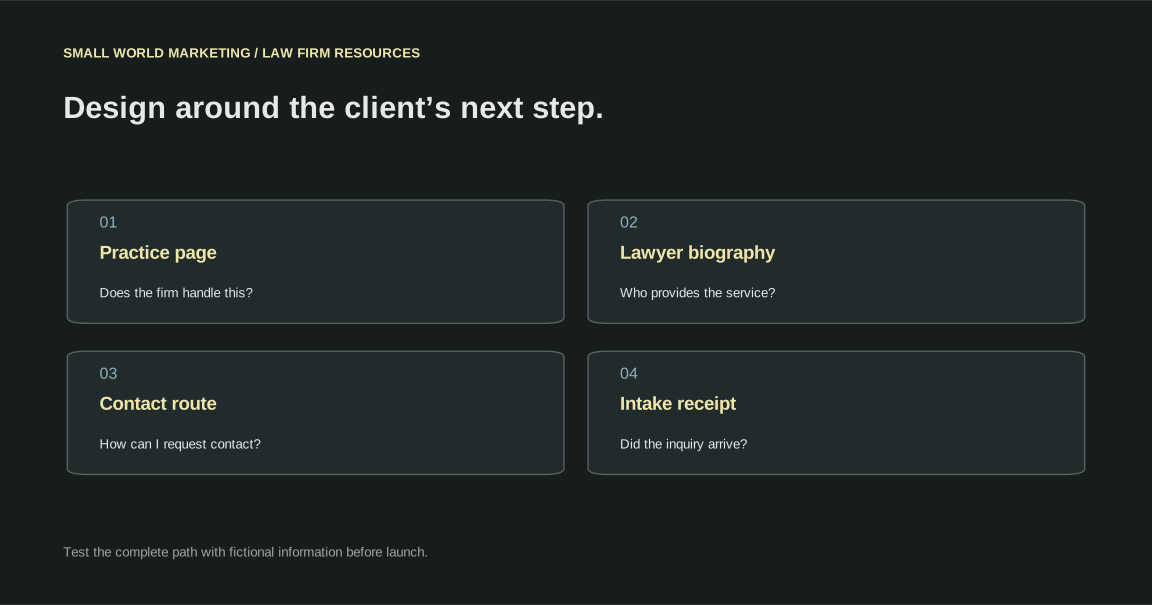
Define the project before choosing the layout
Bring the current site, your practice priorities, and the people who answer inquiries into the first conversation. Identify what already works and what prevents the firm from publishing, explaining its services, or handling first contact.
A family law firm might need a clear distinction between mediation, separation agreements, and litigation. An employment practice might serve employees, employers, or both. Those are information architecture decisions before they become design decisions.
Record the pages, approval responsibilities, integrations, migration work, and ongoing support. If the site will accept appointment requests, define what a confirmed appointment means and who can change availability. If a form routes to a CRM, identify its destination and access requirements.
Give each important client task a clear page
| Page | Reader's task | Content to include |
|---|---|---|
| Practice area | Decide whether the firm handles the issue | Actual services, jurisdiction, relevant lawyers, first contact step |
| Lawyer biography | Assess the person providing the service | Accurate credentials, practice scope, professional background |
| Office or service coverage | Establish where and how the firm serves clients | Real location information and appointment arrangements |
| Guide or question | Understand a specific issue | Appropriate sources, jurisdiction, review, related service |
| Contact | Request follow-up | Clear fields, routing, availability, and confirmation |
Substantial services usually deserve their own pages. Closely overlapping topics may belong on one page with clear sections. The page plan should explain that choice rather than turning every keyword variation into another URL.
Supporting content needs a route back to the relevant practice page. The primary navigation should let a reader find services and lawyers without understanding the firm's internal organization chart. Our law firm content marketing service covers the supporting inventory and review process.
Design first contact with the intake team
The public contact form should collect what is needed for an initial response. Detailed documents and matter narratives need an approved intake process with appropriate access controls and retention arrangements.
Write clear labels and useful error messages. Make required fields apparent. Provide an alternative contact route if the form cannot be completed. A person using a keyboard or screen reader should be able to understand the same instructions.
Test the entire delivery chain with fictional information. Check the website response, the receiving inbox, spam filtering, the CRM record if used, and any acknowledgment. Tell staff how to recognize a test and remove it from reporting.
Avoid making a general marketing form look like a secure client portal. Explain what the firm wants submitted at this stage and route sensitive follow-up through its chosen system.
Make mobile use and accessibility part of acceptance
Review the actual tasks on a phone: find a service, read a biography, tap a number, complete a form, and use a scheduler. Pay attention to text size, navigation, focus states, tap targets, labels, contrast, and keyboard operation.
Specify the accessibility target and the requirements applicable to the firm. Ontario's official website guidance describes WCAG 2.0 AA with exceptions for covered organizations, including businesses and nonprofits with 50 or more employees. A higher design target and the applicable legal minimum are separate decisions. Ontario website accessibility guidance.
Automated checks identify some issues. They should be combined with manual review of the important tasks. A widget or a passing scanner result does not establish that every visitor can complete the intake path.
Diagnose performance rather than buying a score
Images, fonts, scripts, hosting, and external tools can affect different parts of the experience. Measure representative service and contact pages, then fix the observed bottleneck.
Google's Core Web Vitals describe loading, responsiveness, and visual stability. They are useful technical signals; they do not make an otherwise weak service page rank by themselves. Google's Core Web Vitals guidance.
A scheduler may need to load on the booking page rather than on every article. A large hero image may need a better format and size. Those decisions should be connected to the site's actual design and visitor tasks.
Protect the existing site's useful assets
A redesign should begin with an inventory of current URLs, documents, integrations, DNS records, analytics access, and Search Console. Note the pages that bring relevant inquiries or have useful external links.
Preserve working addresses where practical. When a URL changes, specify the closest relevant destination and test the redirect. Moving the website does not automatically mean moving email.
Google notes that significant site changes can cause temporary search fluctuations. The project needs monitoring after launch as well as checks before it. Google's site-move guidance. Our law firm migration checklist covers URL mapping, email records, live data, and rollback decisions.
Agree on the launch checks in writing
| Deliverable | Acceptance evidence |
|---|---|
| Content | Firm approves service scope, credentials, sources, and claims |
| Editing | Authorized staff can complete agreed publishing tasks |
| Mobile and accessibility | Important paths tested on relevant devices and input methods |
| Intake | Phone, form, and scheduler reach their intended destinations |
| Search foundations | Page responses, metadata, canonicals, links, and sitemap checked |
| Migration | Important old addresses and assets have their planned results |
| Measurement | Intended events, account access, and test exclusions verified |
| Handover | Accounts, rights, files, support scope, and renewal responsibilities documented |
For a website connected to law firm SEO, review page coverage and internal links together. A launch that looks good but removes important service content creates unnecessary work later.
Compare the build and ongoing care together
The quote should distinguish design, development, content, integrations, migration, and ongoing care. Page count helps describe scope, but it does not explain the complexity of intake or the amount of legal review.
Our pricing page lists current website starting plans. Use the Canadian law firm website cost guide to compare the full project and recurring costs. Custom requirements need a written estimate.
Also document the operating arrangement: domain control, editing access, hosting, software subscriptions, backups, and the process for changing providers. Our law firm hosting service connects website operation with recovery and support requirements.
Questions to settle before the project starts
Can the existing content be reused?
Yes, where it is accurate, owned or licensed for use, and useful to the reader. Inventory it first. A redesign may need revised structure and copy without discarding every existing page.
Which platform should the firm use?
Choose around editing needs, integrations, maintenance, and the people operating the site. Document the trade-offs in the proposal. A platform name alone does not establish performance, security, or portability.
Will the website rank after launch?
A sound build supports crawling, content, and user tasks. Search visibility also depends on the market, page quality, relevant authority, and continued work. Agree on the technical and publishing deliverables rather than treating launch as a ranking forecast.
What should the firm bring to a review?
Bring the website, desired services, existing content, account access inventory, and intake requirements. That lets us identify whether focused improvements or a rebuild best addresses the current constraints.
Talk to Small World Marketing about your law firm's website.