A law firm content program should make the firm's services easier to find and understand. Start with the important practice pages, then answer the questions that help a prospective client take the next step.
Publishing volume is a poor substitute for that structure. A calendar filled with broad legal articles can leave the primary service pages weak and the intake process unexplained.
Small World Marketing develops search strategy and website content for law firms across North America. We organize page priorities, research, drafting, review, publication, and measurement around the firm's actual services. The firm approves legal substance and professional claims before publication.
Request a legal content review or see our law firm marketing service.
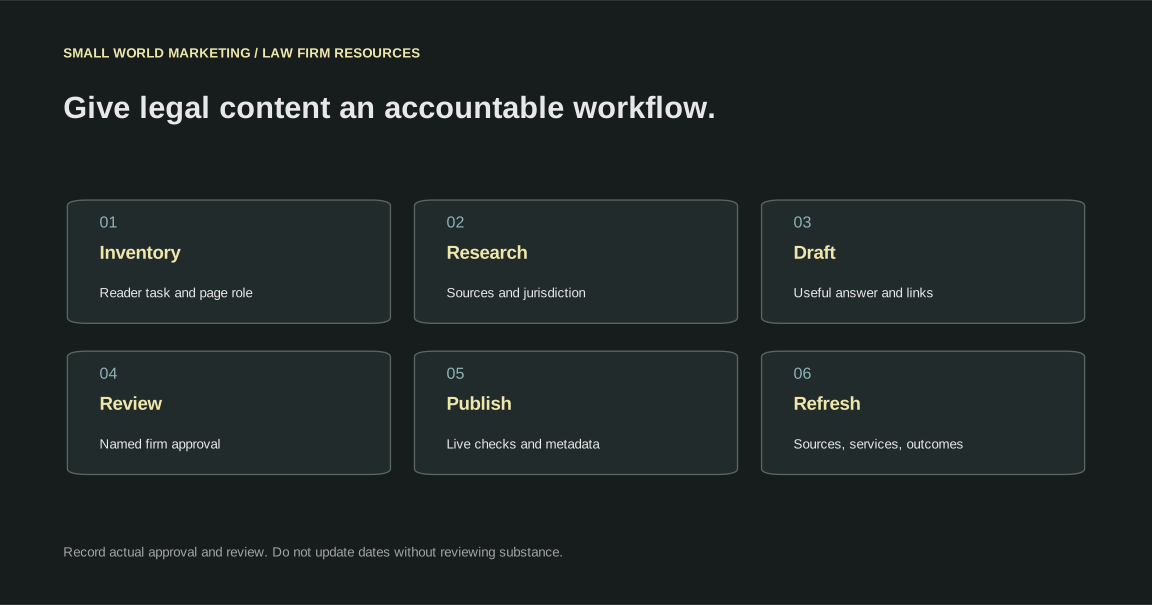
Start with an inventory, not a calendar
List the current service pages, biographies, office pages, process information, and supporting guides. Match each to a reader's task and the firm's actual scope.
Use Search Console, page performance, and intake feedback to identify useful improvements. If the firm gets recurring questions about the first consultation, a clear process page may be more valuable than another broad article.
Assign one primary destination to each substantial intent. Improve or combine overlapping pages before adding another version. The inventory should explain why every proposed asset belongs on the site.
| Asset | Reader task | Content priority |
|---|---|---|
| Practice page | Decide whether the firm handles the matter | Service scope, jurisdiction, lawyers, next step |
| Biography | Assess the lawyer | Accurate credentials and relevant professional information |
| Office page | Understand location and appointment arrangements | Genuine details and relevant service links |
| Process page | Know what first contact involves | Approved intake and consultation information |
| Supporting guide | Understand a specific issue | Sources, jurisdiction, review, and related service |
Our existing family law, employment law, and personal injury marketing resources explain how the page strategy changes by practice.
Give each new page a specific brief
Define the audience, task, service relationship, jurisdiction, proposed outline, sources, reviewer, and next step. Include what the page should not attempt to establish.
For an educational guide, distinguish general information from fact-specific advice. For a service page, explain what the firm actually does rather than describing every possible legal issue in the area.
A useful brief also identifies the current page it improves or supports. That reduces duplicated intent and helps the writer choose relevant internal links.
Research from appropriate sources
Use current primary sources for legal and platform facts. Identify the jurisdiction and source date when relevant. The firm should approve the interpretation and the way the information applies to its services.
Competitor articles can show topic coverage and reader questions. They should not become the factual foundation or be rewritten paragraph by paragraph. A stronger page offers clearer decisions, relevant evidence, and useful tools of its own.
Do not invent client outcomes, national statistics, legal deadlines, or studies. A worked example should be labelled as hypothetical and kept separate from real firm results.
Make the lawyer review process workable
Name the reviewer for each asset. Group the questions requiring approval so the lawyer can review the substantive issues efficiently.
| Review area | What the firm checks | Publication evidence |
|---|---|---|
| Service scope | Matters accepted, exclusions, locations | Approved wording |
| Legal information | Jurisdiction, source interpretation, current substance | Reviewer and review date |
| Professional claims | Credentials, awards, testimonials, outcomes | Verified basis and applicable approval |
| Intake | Required information and next step | Agreed route and instructions |
| Rights | Images, quotations, materials, client references | Permission or licence where required |
Jurisdictions have their own marketing requirements. BC firms can use the BC Code's marketing chapter as a primary source for review. Do not replace applicable rules with a generic statement that all Canadian legal advertising follows one standard.
Record requested corrections and unresolved questions. A draft waiting for legal approval should remain a draft, even if the publishing calendar has a vacant slot.
Use graphics and tables to clarify decisions
A table can compare choices, list required information, or make a process inspectable. A diagram can show a page structure, intake path, or review sequence. Use them where they shorten the explanation or help someone act.
Charts need a defensible dataset or a clearly labelled illustration. Do not create a conversion graph because a rising line looks persuasive. Real results need their measurement, period, and context.
Give images meaningful alternatives and keep important information in readable text. Tables should have clear headings and work on a small screen. Downloadable worksheets need instructions and blank fields that do not masquerade as completed research.
Our website cost guide uses published SWM prices and labelled calculations. The hosting guide separates arithmetic illustrations from website measurements.
Publish pages that fit the site
Assign a clear title, description, stable URL, relevant headings, source links, and internal links. Link supporting guides to the corresponding service and related questions.
Check the actual published page: readability, mobile layout, graphics, downloads, canonical address, sitemap inclusion, and the contact route. A document approval does not establish a successful publication.
The law firm website design service covers editing and launch acceptance. The migration guide explains how to preserve useful URLs if the site changes.
Keep search and AI claims tied to evidence
Useful source material and public accuracy support the site across discovery channels. Measure observed AI mentions and citations separately from technical checks and visits. Our law firm AI visibility guide explains the log and sampling limits.
Google's helpful-content guidance emphasizes original, useful information and satisfying the reader's task. It does not specify a preferred word count. Google's people-first content guidance.
A concise process page can be complete. A substantive buying guide may need tables and more detail. Write to the task instead of stretching every article to the same length.
Measure the role each page is intended to play
| Page role | Useful observations | Next decision |
|---|---|---|
| Service page | Relevant queries, visits, and inquiries | Clarify scope, proof, or contact path |
| Supporting guide | Search intent, source accuracy, service-page clicks | Improve the answer and relevant links |
| Process page | Intake questions and task completion | Remove practical uncertainty |
| Local page | Genuine market relevance and local inquiries | Strengthen distinct local value |
| Case study | Reader engagement and related service visits | Improve explanation and context |
Do not judge every page by raw traffic alone. A focused service page may reach fewer readers and produce more relevant demand than a broad informational article.
Define reporting stages with the firm and identify attribution gaps. Keep confidential narratives out of routine marketing reports.
Give content an owner after publication
Review pages when services, lawyers, offices, sources, or platform rules change. Assign a person and a reasonable review process for important assets.
Update the substance when necessary and record the actual review. Changing a displayed date without reviewing the information does not make a guide current.
Download the legal content inventory worksheet to record the page, reader task, sources, reviewer, publishing status, and refresh needs.
Common legal content questions
Who writes and who approves?
The proposal should allocate research, drafting, editing, legal review, and publication. SWM prepares marketing content within the agreed scope; the firm approves its legal substance and professional claims.
Can existing content be improved?
Yes. Review intent, accuracy, ownership, structure, and current performance. A focused rewrite can be more useful than publishing another page on the same topic.
Can AI assist writing?
AI can assist parts of the workflow, but its output still needs verification, appropriate sources, rights review, and accountable approval. The publishing process should evaluate the actual page, regardless of how the first draft was produced.
How is scope priced?
Specify asset types, research, review, revisions, publishing, graphics, and refreshes. Use the proposal checklist and marketing cost guide to compare work and costs.
Talk to Small World Marketing about a useful legal content program.