AI visibility should be measured through what a platform actually shows. A website checklist can identify technical conditions. It cannot establish that ChatGPT, Gemini, or Google's AI features named the firm or linked to its pages.
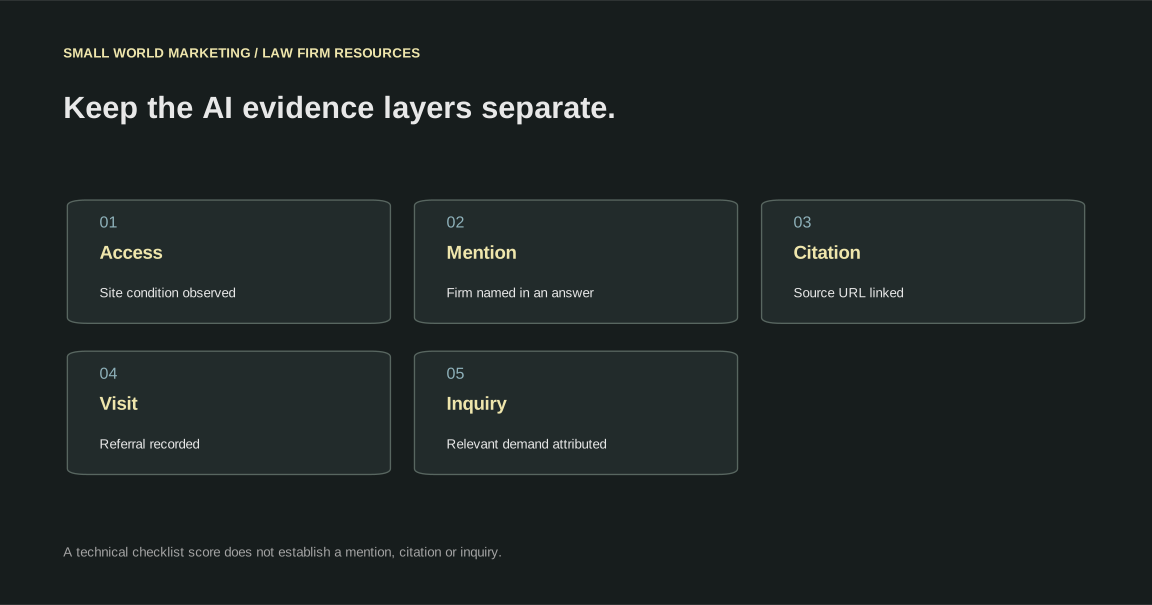
For law firms, separate five questions: can the site be accessed, was the firm mentioned, was a source cited, did someone visit, and did a relevant inquiry follow? Each needs different evidence.
Small World Marketing includes AI search visibility in its law firm marketing work and provides a broader GEO service. This guide explains the legal-site foundations and a measurement process that keeps the observations honest.
Begin with a source the reader can trust
Publish accurate service descriptions, lawyer information, real location details, and a clear contact route. Useful guides should identify jurisdiction, appropriate review, sources, and what the firm actually handles.
Keep the public identity consistent across the website and relevant professional listings. Fix outdated biographies, incorrect contact details, and ambiguous service coverage. These are worth addressing even when an AI platform never shows the page.
The law firm content marketing service explains the source and review workflow. The Google Business Profile guide covers the firm's local representation.
Keep technical requirements separate from inclusion
Google says established SEO practices remain relevant to AI Overviews and AI Mode. Supporting pages need to be indexed and eligible for a search snippet. No special AI schema or machine-readable text file is required, and eligibility does not guarantee inclusion. Google's AI features guidance.
Review crawl access, response errors, accidental noindex, canonicals, internal links, and important text content. Structured data should accurately describe the visible page; it is not an AI recommendation switch.
Those checks apply to site conditions. Record their completion as technical work rather than converting a checklist score into a percentage chance of being recommended.
Use an evidence model with separate layers
| Layer | Evidence | What it establishes |
|---|---|---|
| Technical access | Observed response, indexing, links, search controls | Conditions of the site or page |
| Brand mention | Saved answer naming the firm | Appearance in that observed answer |
| Citation | Saved source link and destination | A linked source in that observed answer |
| Referral visit | Available analytics source and landing page | A recorded visit within attribution limits |
| Qualified inquiry | Broad matter fit and source information | Relevant demand attributed where evidence allows |
Keep an uncited mention distinct from a citation. An answer can name a firm without linking to it. It can also cite a legal guide without recommending the publisher as a service provider.
Different platforms use different systems and interfaces. Findings from Google's AI features should not be treated as a complete specification for another platform.
Build a repeatable question set
Start with the actual services and locations. Include a mix of service-selection questions, explanatory questions, and firm-specific questions. Use consistent wording when comparing observations.
For a fictional employment practice, the set might ask about finding an employment lawyer in its genuine market, choosing representation for a termination issue, and understanding the firm's own services. The example does not imply that SWM has measured a particular firm's answers.
| Question group | Purpose | Important distinction |
|---|---|---|
| Service and place | Observe local provider discovery | Genuine service coverage versus an invented office |
| Legal topic | Observe cited information sources | Educational source versus provider recommendation |
| Firm name | Check public identity and accuracy | Branded discovery versus non-branded visibility |
| Selection criteria | Observe the information used to compare options | Stated criteria versus evidence actually shown |
Do not put confidential client narratives into public AI tools for a visibility test. Use public, hypothetical questions that describe the intended search task.
Record each observation with its context
Document the platform, visible mode, question, date, location or locale where known, answer, firm mention, cited URLs, and relevant context. Save evidence in the team's approved system.
Repeat the planned sample rather than selecting only favorable answers. Mark unavailable features, failed attempts, and ambiguous outputs explicitly. Answers can vary between runs, accounts, locations, and product updates.
If you report a citation frequency, include the numerator, denominator, question set, platform, period, and sampling limitations. A sampled frequency describes the observations. It is not the firm's share of all AI searches.
Download the AI visibility observation log. The file is blank and contains no fabricated results.
Turn findings into page improvements
An observed answer may point to a content gap, outdated fact, unclear service, or weak source. Identify the affected page and improve the public information where the evidence supports that action.
For example, if public sources describe an old office, correct the underlying records. If the site fails to explain the lawyers' service scope, improve the relevant page. If a guide lacks a jurisdiction or meaningful source, address the content and review.
Avoid adding dozens of FAQs merely because another page was cited once. One observation does not prove that a formatting choice caused the citation. Keep changes connected to reader usefulness and documented issues.
Our law firm website design service covers the page structure, while the SEO proposal checklist helps specify implementation responsibilities.
Connect visits and inquiries without overstating attribution
Inspect referral data when the platform supplies it. Also ask an appropriate broad referral-source question in the firm's intake process. A person may mention an AI tool after visiting several other sources.
Keep self-reported attribution and recorded analytics as separate fields. Mark unknown sources honestly. Do not force every inquiry into an AI category because the campaign was intended to improve AI visibility.
Google reports AI feature performance within Search Console's Web search traffic rather than a clean separate AI-only report. Google's measurement guidance. Use that limitation when describing what the report can establish.
What an AI visibility proposal should contain
| Deliverable | Definition to request |
|---|---|
| Site review | Specific checks and affected pages |
| Content work | Reader tasks, sources, legal review, publication |
| Observation sample | Platforms, questions, timing, and context |
| Reporting | Mentions, citations, visits, and inquiries kept separate |
| Improvement cycle | Actions tied to findings and implementation owners |
A report should show unresolved facts and attribution gaps alongside favorable observations. Treat promises of universal AI recommendations or guaranteed citations cautiously by asking for their exact terms and evidence.
Common AI search questions
Does schema make an AI tool recommend a firm?
Accurate structured data can describe visible information. Google does not require special AI schema for its AI search features. A schema check alone does not establish an observed recommendation.
Is AI search a replacement for legal SEO?
The work overlaps with useful pages, public accuracy, technical access, and authority. Keep the existing search and intake foundations while measuring the additional discovery surfaces separately.
Can a firm measure AI visibility without paid software?
A controlled manual observation log can establish a baseline for a defined sample. Software can assist collection and analysis, but the methodology and evidence still need review.
What does a good first review produce?
Specific site issues, public accuracy gaps, a documented observation plan, and page improvements with owners. It should distinguish observed results from proposed work.
Request a law firm search visibility review from Small World Marketing.