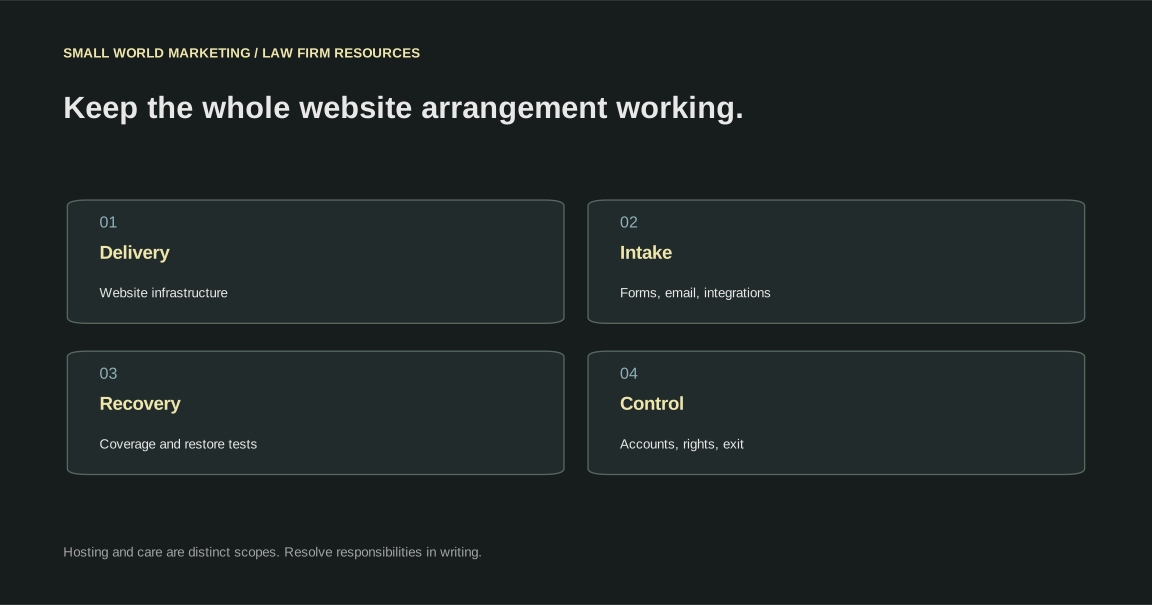
A law firm's public website needs dependable operation, tested inquiry delivery, clear account ownership, and a recovery plan. Hosting is the infrastructure. Website care is the work that keeps the whole arrangement usable.
Small World Marketing offers website support alongside its web design and marketing services. For a law firm, we start by reviewing the existing website, integrations, DNS, access, and support needs. The written scope establishes what we manage and how the firm can obtain help.
Request a hosting and website care review or read the law firm hosting buyer's guide.
Review the operating website before moving it
Inventory the platform, important pages, forms, scheduler, CRM connections, analytics, domain, DNS, and email. Establish who controls each account and where inquiries and backups are stored.
Some websites need a focused repair rather than a hosting move. Slow pages can result from images, scripts, or integrations as well as server response. Missing form notifications can involve mail routing or filtering. Identify the observed failure before choosing infrastructure.
For a new build, align hosting and care with the editing workflow. A static site, WordPress installation, and custom application have different maintenance requirements. The proposal should explain those requirements and their owners.
Define infrastructure and care separately
| Area | Infrastructure question | Care question |
|---|---|---|
| Website delivery | Where and how are pages served? | Who investigates errors and deploys fixes? |
| Security | Which controls are configured? | Who reviews access and maintains components? |
| Recovery | What is copied and retained? | Who can restore it and verify the result? |
| Intake | Which services receive submissions? | Who tests delivery and investigates missing inquiries? |
| Which provider and DNS records are involved? | Who handles mail issues within the agreed scope? | |
| Editing | How are content changes published? | Which revisions are included and how are they requested? |
Hosting does not automatically include every item in the second column. A support agreement should explain the full arrangement in language the firm's operating team can use.
Our published pricing lists Proactive Website Support at CAD 49 per month, checked October 10, 2026. Confirm its applicability, included work, exclusions, billing, and support terms for the site. Do not infer a response-time or recovery guarantee from a plan name.
Make inquiry delivery an acceptance check
An available homepage can coexist with a broken form. Test the visitor's path and the receiving system separately.
Use fictional contact details to check the service page, submission, confirmation, inbox or CRM, and any acknowledgment. Keep tests out of business reporting and avoid using real matter information in troubleshooting logs.
Confirm the preferred route for sensitive follow-up. A public marketing form should collect a proportionate initial inquiry; detailed documents belong in the firm's approved process.
If website forms rely on mail delivery, identify the sending service and related DNS records. Moving web hosting should not unintentionally disrupt business email.
Document account control and changes
The firm should know who controls the registrar, DNS, hosting, editing, analytics, Search Console, and external tools. Use appropriate individual access and keep recovery contacts current.
| Account or asset | What to document |
|---|---|
| Domain | Registrant, renewal responsibility, recovery route |
| DNS | Who can change records and how changes are reviewed |
| Hosting | Administrative access, billing, deployment process |
| Content and code | Rights, files, export options, agreed handover |
| Intake tools | Destinations, access, retention, support boundaries |
| Third-party licences | Renewal, transfer, and replacement requirements |
Account control becomes especially important when a lawyer leaves, staff changes, or the firm changes providers. Document access removal and the exit process while the arrangement is working.
Ask what recovery actually restores
Backup coverage should match the system. WordPress may need files and a database. A static site may require source, assets, build configuration, and deployment access. Neither arrangement automatically backs up records stored in a separate form service.
Identify backup frequency, retention, storage, access, and restore responsibility. Specify how a restore is tested and what happens to newer content or inquiries created after the last backup.
A successful restore should be followed by checks of important pages, assets, and intake. A backup file alone does not establish a usable recovery process.
Our hosting guide includes a detailed provider checklist, account map, and recovery questions.
Resolve data location for the whole stack
A server location describes one component. CDN caching, backup storage, logs, analytics, email, and intake tools can have different processing locations and access arrangements.
Ask the provider to describe the relevant components and subprocessors. The firm's privacy and professional requirements should be assessed against that complete picture rather than a Canadian hosting label alone.
The Law Society of BC publishes a cloud computing checklist with questions firms can use in provider assessment. The federal privacy regulator also explains considerations for cross-border processing. Applicability needs the firm's own circumstances and relevant requirements.
Move hosting with a controlled cutover
A move should have a verified copy of the site, an account and DNS inventory, a URL plan where needed, acceptance tests, and an identified rollback decision.
Do not remove the previous environment before checking the new site and preserving any remaining live data. Test email records, forms, redirects, certificates, and important pages after the change.
Use the law firm website migration checklist to organize that work. A same-URL hosting move and a redesign that changes URLs have different search dependencies.
Common hosting and care questions
Do law firms need a special hosting product?
The important distinction is the service and operating requirements: access, recovery, support, integrations, privacy, and professional review. A legal label on a plan does not establish those capabilities.
Can SWM support an existing website?
Bring the platform, account access, and current issues for review. We need to establish compatibility and scope before committing to care for an existing system.
Does hosting include a client portal?
A public website and a client portal have different purposes. A portal requires its own access, data, recovery, and integration scope. Do not assume it is included in ordinary website hosting.
Will changing hosting improve rankings?
Fixing a documented availability or performance problem can support the site. Search results also depend on content, relevance, competition, and other signals. Diagnose the problem and test the change rather than treating migration as an automatic ranking improvement.
Bring the operating details to the review
Bring the current site, providers, account inventory, intake tools, and known issues. We will assess the arrangement and identify the care, repair, or migration work to scope.
Talk to Small World Marketing about law firm hosting and website care.